Showing posts with label Travel・旅行. Show all posts

Monday, April 1, 2013

Aalto house・アアルトの家, Vol. 1

It was several years ago, just about this time of a year, when spring was sprung in the temperate countries in the northern hemisphere, like Japan and USA. In Helsinki, Finland, the shoes and rivers were still frozen. It was my first trip to Helsinki, and I had only a few days to explore; so I had to prioritize. But,  as a huge fan of the father of Finnish design Alvar Aalto, I could not miss visiting his house (which is kept as a private museum).

もう、3−4年前になりますが、ちょうど今頃にフィンランドを訪ねたことがあります。日本など北半球の温帯の国々が春を謳歌し始める頃、フィンランドの浜辺や川は凍っていたような...。初めてのヘルシンキ訪問、それもほんの数日間となると、的を絞って街を歩くことになります。それでも、スカンジナビア・デザインの巨匠のアアルト好きな私としては、彼の家を外すことはできません。


I was the only visitor for the hour, so they gave me a private tour and afterward let me explore on my own. (Yes!) He made the house when he was still a young and start-up architect in the area, which was considered a far end of the city (at that time), on a very tight budget. This house was his experiment, showcase, and grand collection of his motto to create something everyone can afford. He loved the place dearly and spent most of his life there, together with two much loved wives. It was a full life - you can feel it there in his house.

訪ねていくとその日はとてもすいていたので、独占ツアーをしてもらいました。彼がまだ若くて駆け出しの頃、当時はまだヘルシンキの果てにあたる場所で、安く一戸建てを造ろうといろんな工夫がされたとか。万人の手に届く暮らしをデザインする、そのモットーとスタイルの実験であり、見本であり、集大成でもあったこの家で、彼は人生の大半を過ごしました。二人の愛妻を得て、充実した人生だったようです。


In this post, I will post photos of the office/studio part of the house.
このポストでは、スタジオ/仕事場部分を紹介します。


Aalto liked this corner of the house. His desk was permanently placed here - not in the office room.

アアルトはこのコーナーがお気に入りだったとか。彼の机は、事務所用の部屋でなくずっとこちらに置かれていたらしい。


Desks of his workers. The pictures were painted by Aalto. The upper floor was for the newbies. They had to start there by sharpening hundreds of pencils a day. (laugh)

弟子たちの机。飾ってあるのはアアルトの描いた絵。上の階は、一番の若手が鉛筆削りからはじめた場所らしい。(笑)


This room was supposed to be his office, but he didn't like it, apparently. Instead, his wife and fellow designer Aino used it.

ここは、アアルトのオフィスになるはずだった部屋。代わりに、妻でパートナーだったアイノさんが愛用していたらしい。


This is a secret door to the 2nd floor of the house. When he was too busy or overwhelmed, he would sneak out of the work place from this door to the balcony.

この扉は、隠れとびら。忙しすぎて逃げ出したいときはここからするりと二階のバルコニーに隠れ出たらしいです。


A collection of bits and pieces. Some were dug up during construction of the house, and others were taken up on trips to all over the world.

いろんな破片のコレクション。家を建てるときに出てきた物や、各国への旅行で拾ってきた物など。


To be continued in Vol. 2...

その2につづく。

Saturday, July 14, 2012

Lamarck’s natural history museum・ ラマルクの自然史博物館


A natural history museum in Paris is an amazing place. I mean les Galeries de Paléontologie et d'Anatomie comparée (the Gallery of Palaeontology and Comparative Anatomy). It feels like stepping into a mad professor's lab from the 19th century, which probably is what it is!
とても素敵な自然史博物館が、フランスはパリにあるのです。les Galeries de Paléontologie et d'Anatomie comparée、直訳すると「古生物学と比較解剖学の展示場」という名前の歴史ある博物館。同じ界隈に新しい自然史博物館もあり、それはそれで見応えがあるのですが、この博物館にはぜひ一度足を運んでもらいたいです。まるで、19世紀のエキセントリックな博物学者の研究室に入り込んだかのような空間なのです、というより、まさにそのまんまのような気がします。

A huge hall full of skeletons of all sorts of animals... lined up in orders, arranged with evolutionary relationships in mind. Or more precisely, it is the other way around; scientists pondered about relationships among those bones and formulated the idea of evolution. Seeing all these mammalian bones in one place, it is impossible not to think that they are related, really, because they are so similar.
見所は、ありとあらゆる哺乳類の骨格が所狭しと置かれた一階の特大ホール。進化の過程にそって並べられているのですが、実のところはその逆で、もとは動物の進化の過程を見出すために並べられていたのです。いろいろな動物は、外見は全く違っても、骨格を比較してみるとクジラとネズミの間にも共通項がありすぎて、相互関係がないとは考えられなくなります。

Jean-Baptiste Lamarck (1744-1829), who was a driving force in the synthesis of evolution, was one of the founding curators of the museum. Lamarck is not as credited as Darwin, probably because he wasn’t correct all the way – about how the evolution can occur. He proposed the inheritance of acquired traits, which is considered wrong by majority now. Acquired traits, like the blue hair on some people’s head or your ability to write 3,000 Chinese letters, are not usually inherited, and so thumb was put down on Lamarck.

この博物館の初代学芸員の一人は、動物・植物学者で進化論の成立に大きな貢献をしたラマルクJean-Baptiste Lamarck (1744-1829)でした。ラマルクは、ダーウィンに比べると知名度が劣るのですが、それは、ラマルクが完全には正しくなかったからかもしれません(どうやって進化が起こるのか、その機構のところで間違っていたと考えられています)。ラマルクは、獲得形質(生き物が、生まれつきでなく、獲得して得た特質)が遺伝して進化を促す、と唱えました。青い髪の毛だとか漢字を3000個書ける能力など、獲得形質は後世に遺伝することは稀なので、ラマルクの説は支持されなかったのです。

But his idea, even called Lamarckism, is re-visited recently, since more evidences show that acquired modifications on DNA could be passed down to children. Also, if we think of it, so many aspects of us are made of things we picked up from nurture, rather than what we were given as nature. A father who loves his blue hair probably wouldn’t stop his 10 years-old daughter wanting to dye her hair blue. As long as there is a possibility of ‘learning’ from others, Lamarck’s got a point, it seems.
この、ラマルキズムとまで銘打たれた考え、実は最近見直されつつあります。DNAの配列が変わらなくても、後天的に獲得されたDNA分子の変容が遺伝する可能性が明らかになってきたのです。そして、私達人間をとってみても、私達らしさは環境から得られたものが多く、生まれつき決められていることだけではないですよね。例えば、青い髪が自慢のお父さんは、10歳の娘が自分も髪を青く染めると言い出したとき、きっと止めないでしょう。周りから「学ぶ」ことができる場合、ラマルクの説は一理あるように思えます。

By the way, in this museum you can see something hard to find in new ones: curiosity items. There were preserved specimens of mutant cats (like the ones with only one eye), for example. Mutants often reveal something new about non-mutant beings, and so they are important sources of information in modern biology (especially in genetics). But I wonder if these special organisms helped or confused the old-time scientists in solving the mystery of natural history.
ところで、この博物館には、ある、古典的な博物館にはよくあるけれど新しめの博物館ではあまりみかけないもの、も展示されています。珍しくて興味深いものとして、ねこなどの突然変異体(例えば、一つ目の子猫)が標本になっているのです。変異体は、得てして生体のつくりの未知なる部分を見せてくれたりするので、生物学(特に遺伝学)にとって大切な存在です。ただ、近代科学の初期という時代に、この子たちは研究者の助けになったのか、はたまた困惑させたのか、などと思いを馳せてしまいました。

Saturday, June 30, 2012

Subway in Stockholm・ストックホルムの地下鉄


Stockholm is the largest city in Scandinavia with 850,000 inhabitants (2 million in the metropolitan area). The city consists of several islands and lakes. It is urban but at the same time close to nature; in other words, it sure looks like a nice place to live. Pretty reliable public transportation, which is rare to find globally speaking, covers the entire city well, and so it is easy to walk around and explore.

スウェーデンの首都ストックホルムは、人口85万(近郊を含めると200万)の北欧で一番大きな都市です。いくつもの島と湖から成り、都会なのに自然が身近に感じられて住み心地がよさそう。割と信頼できる(これ、世界的には珍しいのですよ)公共交通システムがくまなく広がっていて、歩きやすい街です。


It is expensive, though. The subway fare starts from $5-6! Scandinavia is expensive; the reputation is correct. “It is a downside of living in Stockholm.” I said, and a friend of mine who lives there replied that there are super discounted passes for residents of the city. Ah, that makes sense.
地下鉄の初乗りはとても値が張りました(500−600円)。やっぱり北欧って物価が高いんだなあ、そういう意味では暮らすの大変そう、とストックホルム在住の友人に訊いてみたところ、定期券などはかなりお得らしいです。なるほど...


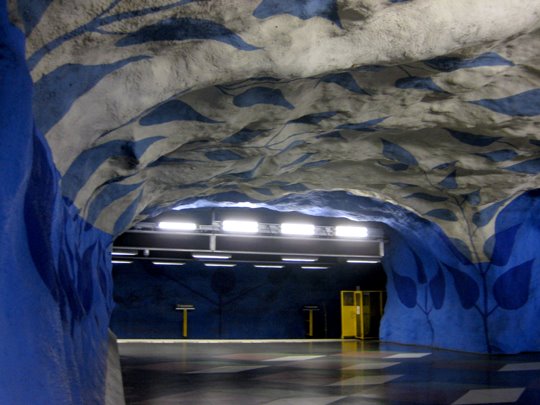
But it is worthy of going underground for another reason: art. Some lines made each station into artistic canvas, and I hopped on and off the vehicle at several stops. I did not fully get the concepts of some of the installments, but some others made me want to use them as everyday hub.
高くても、線によっては駅全体がアートワークになっている所があって、おすすめです。途中下車して回るのも楽しいですね。中にはテーマが「?」なものもありましたが、「うん、この駅を使って暮らしたい!」と、思わせてくれるものもありました。


I was particularly impressed by this one. The wall is covered with all sorts of colors in bright pastel tones. There are maps and timeline figures, on histories of world civilizations in parallel.  
いくつか見て回った駅の中でも特に関心したのはこちら。きれいな配合のパステルカラーで色とりどりに何かが書かれているのです、壁一面に。これ、地図と年表みたいなんです。歴史をおって代表的な国や人の存在した時代を記してあるんですね。


And the events are marked in different colors, depending on the cultural regions! So neatly done. It does tickle soft spots of history and geography lovers!
しかも、どの地域に属するのか、カラーコードになっているみたいです!歴史や地理好きにはたまらないインストレーションです。力作です。